Know what you’re looking at
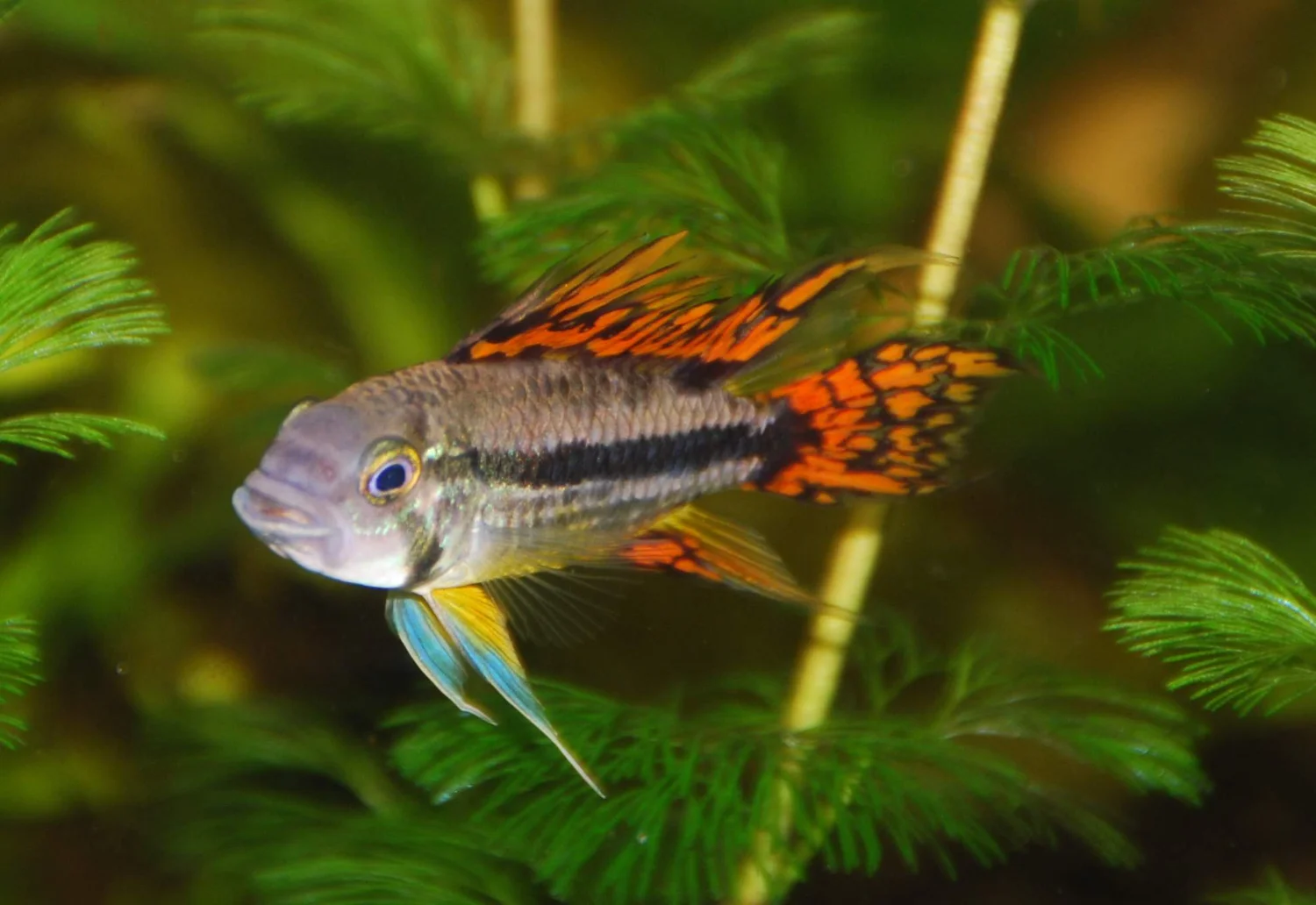
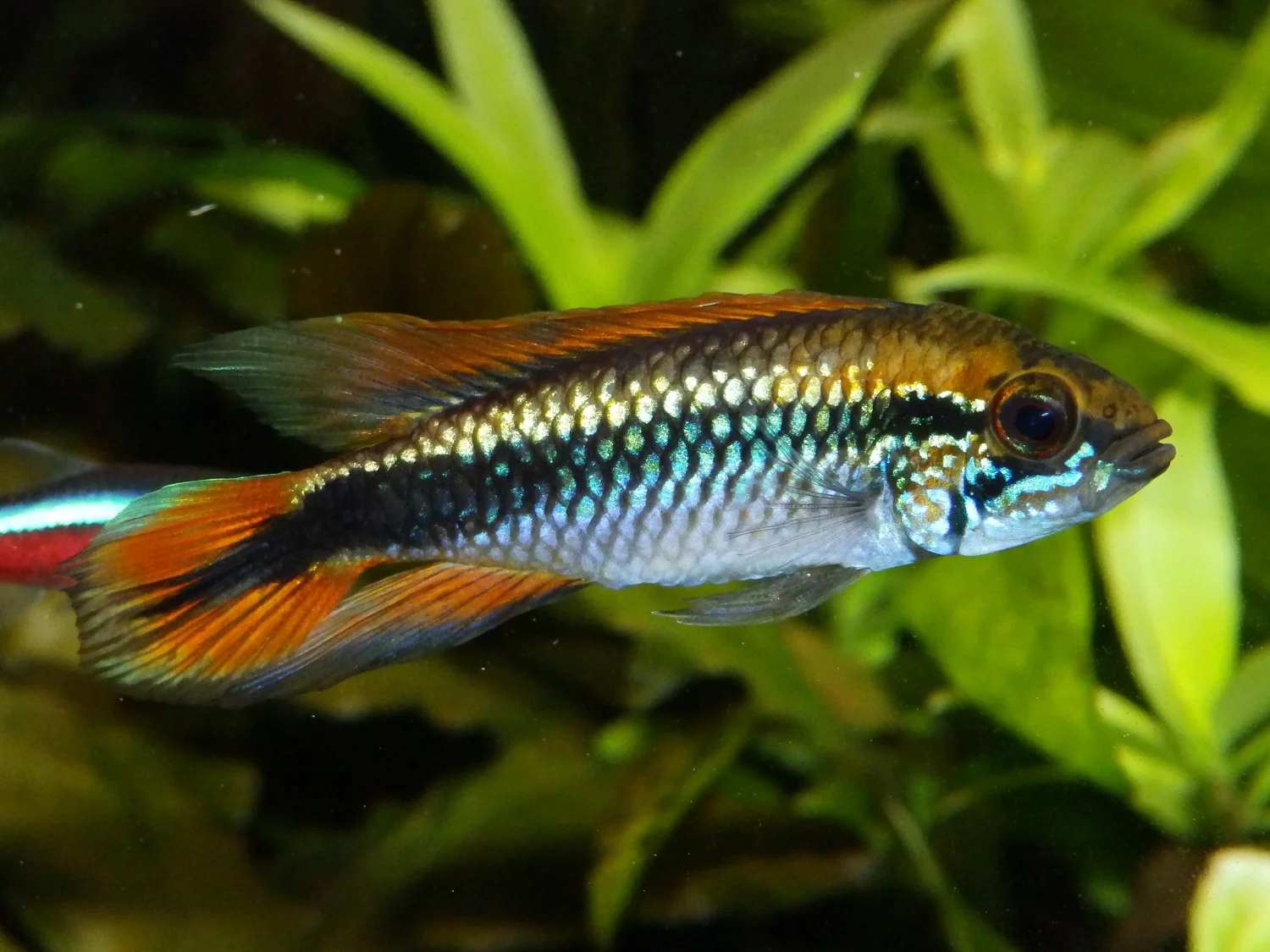
Adult males often show a pointed, extended caudal fin; females are smaller and less ornamented. Color alone is a weak identifier across the many trade forms. Compare fin shape, lateral markings and reliable locality records, especially when a fish is offered under a new commercial name.
From river to aquarium
Recorded across much of the Amazon–Solimões system, this species uses quiet marginal habitats with leaf cover. A locality label carries more husbandry value than a generic “Amazon” description. In the aquarium, maintain a sheltered bottom layer and leave routes between retreats so fish can avoid direct confrontations.
A practical aquarium plan
Use the displayed targets as conservative planning values for an aquarium-raised fish, then confirm its accustomed water. Do not move a fish rapidly toward extreme acidity because a wild breeding report mentions it. Keep a written record of pH, hardness, temperature and behavior to distinguish a trend from a single reading.
Feeding with observation
Small invertebrate foods suit this species. Offer a varied selection in portions the fish can reach, and check that females or subordinate fish actually eat. A fish that waits behind wood may be avoiding a rival rather than rejecting the food itself.
When breeding changes the balance
Cave spawning and female brood defense require separate retreat areas. Some wild populations have demanding soft-water breeding requirements; successful maintenance does not imply eggs will develop in the same water. Work from the provenance of the actual pair and change conditions deliberately, with replacement water prepared consistently.
Choose the company carefully
Consider captive-bred stock with peaceful fish that occupy a different level of the aquarium. A community may allow adult display while compromising fry survival. Choose which outcome matters before stocking, and retain the ability to remove an aggressor or separate a targeted partner.
Keep the story with the fish
Keep commercial strain names separate from collection localities. Do not merge breeding lines simply because both are sold as agassizii. If ancestry is unknown, label offspring honestly as aquarium stock; a speculative locality becomes much harder to correct after fish are distributed.
Sources & editorial notes
Source-checked 2026-09-24. Species facts draw on the references below; aquarium targets, difficulty ratings and planning advice are our editorial synthesis. Targets are deliberately narrower than some reported field ranges and are not a guarantee for every locality or strain.
Informal groups and complexes are navigation aids, not fixed taxonomic ranks. Read the editorial approach.