Know what you’re looking at
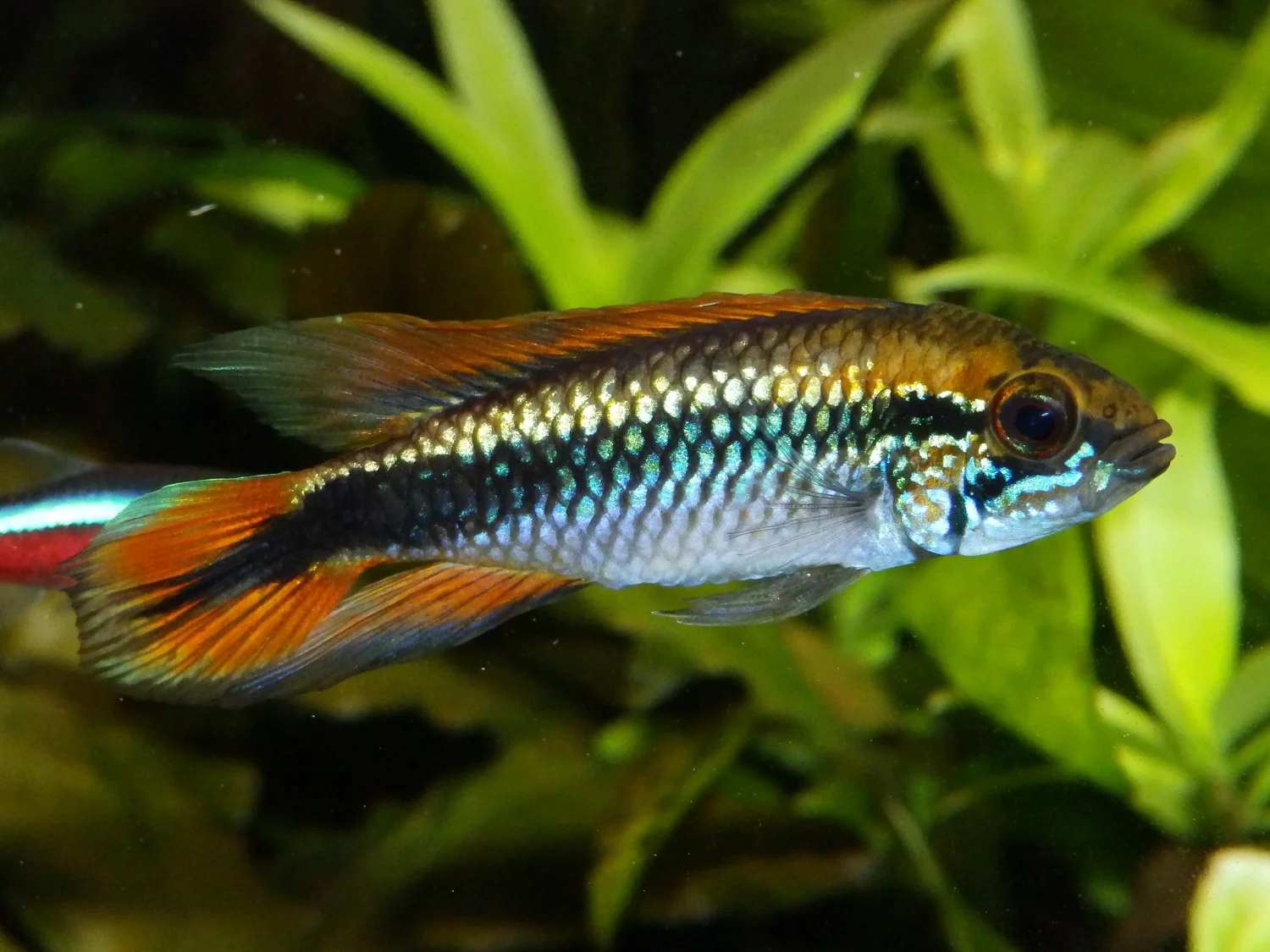
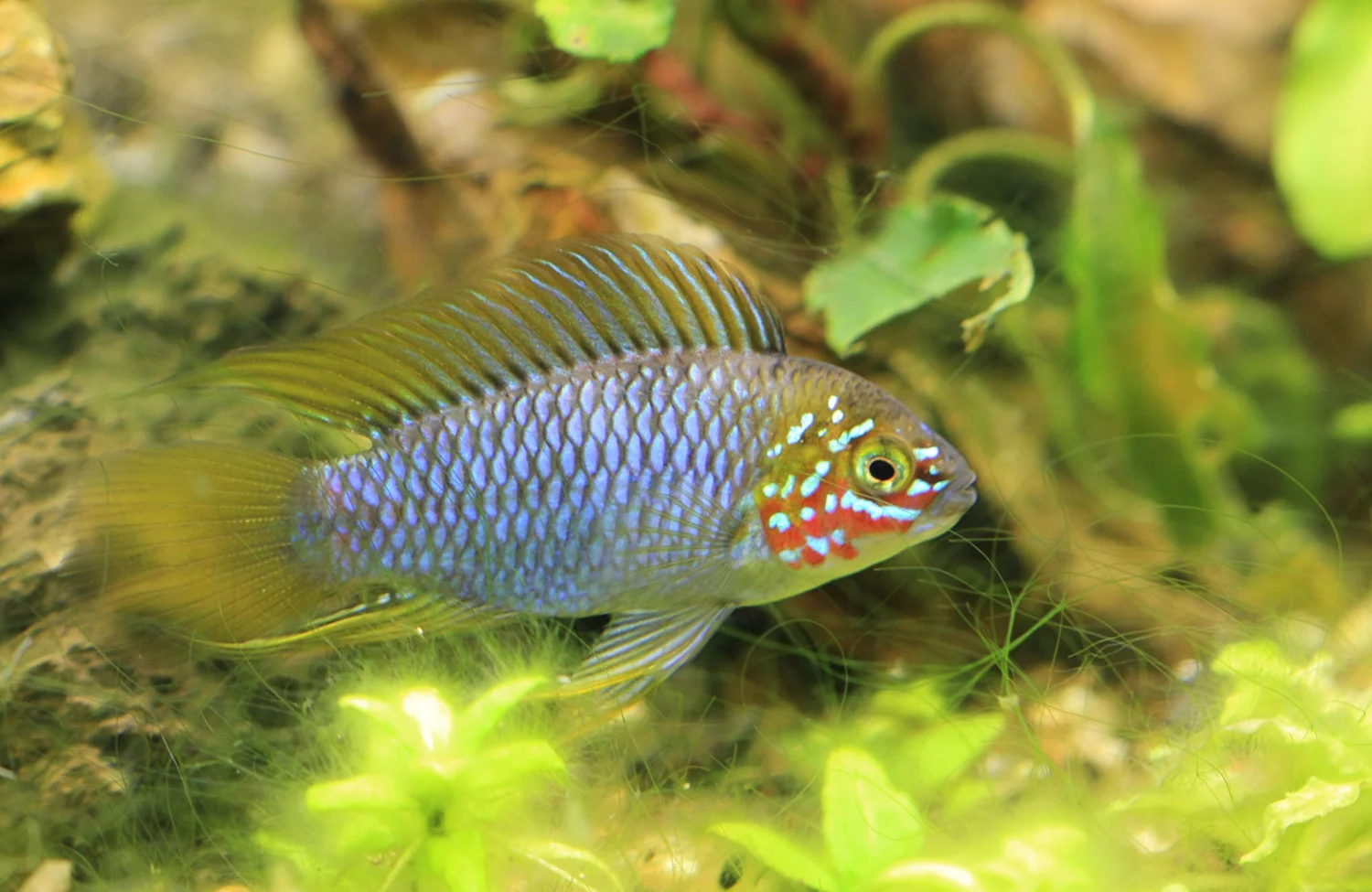
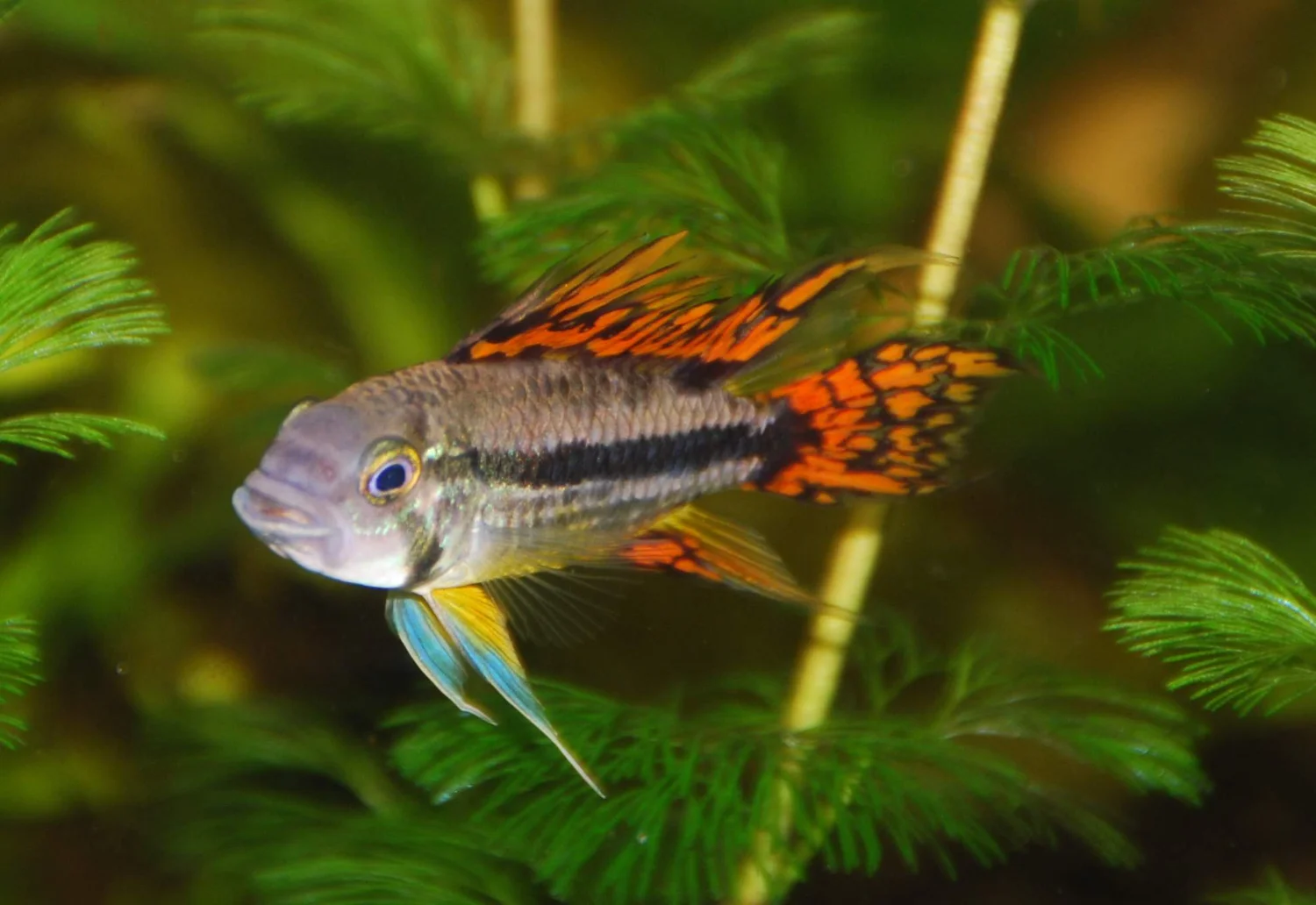
Males develop pronounced front dorsal extensions and a large mouth. Orange Flash and Double Red are ornamental strain names, not separate species or collecting localities. Females are smaller and less elaborately finned. Record the seller’s identification, then compare body shape and markings as well as color.
From river to aquarium
The species occurs across the upper Amazon in Peru and western Brazil. Quiet tributaries and leaf accumulations offer shelter. The useful aquarium lesson is structural complexity near the bottom: create shaded retreats and broken sightlines rather than relying on open swimming space alone.
A practical aquarium plan
Our planning target is an established aquarium of at least 75 litres with a 60 × 30 cm base. That is a starting point, not permission to add a trio. Arrange more than one retreat and watch whether each fish can feed without being driven into a corner. Captive lines and wild localities can differ.
Feeding with observation
Offer small live or frozen invertebrate foods; captive fish may also accept sinking prepared food. Observe the individual feeding instead of assuming food reaching the substrate has been eaten. Use separate feeding spots when a dominant fish patrols the front glass.
When breeding changes the balance
A female lays in a sheltered cavity and tends the brood. Her defense of that space can make yesterday’s compatible arrangement unsuitable. Prepare a divider or spare aquarium before spawning. Confirm the breeder’s water conditions; wild-origin fish may need softer, more acidic conditions than a domestic display fish.
Choose the company carefully
Captive-bred cockatoos can be considered for a peaceful community with carefully selected upper-water fish. Avoid treating dwarf size as proof of peacefulness. Other bottom-territory cichlids and valuable shrimp are poor default additions, and a dedicated aquarium is easier to manage for fry.
Keep the story with the fish
Ask whether the fish is captive-bred, which strain it represents, and whether the seller has kept the sexes together successfully. Preserve any locality information on invoices and breeding records. A vivid red strain does not establish a wild origin or guarantee a particular temperament.
Sources & editorial notes
Source-checked 2026-09-24. Species facts draw on the references below; aquarium targets, difficulty ratings and planning advice are our editorial synthesis. Targets are deliberately narrower than some reported field ranges and are not a guarantee for every locality or strain.
Informal groups and complexes are navigation aids, not fixed taxonomic ranks. Read the editorial approach.