Know what you’re looking at
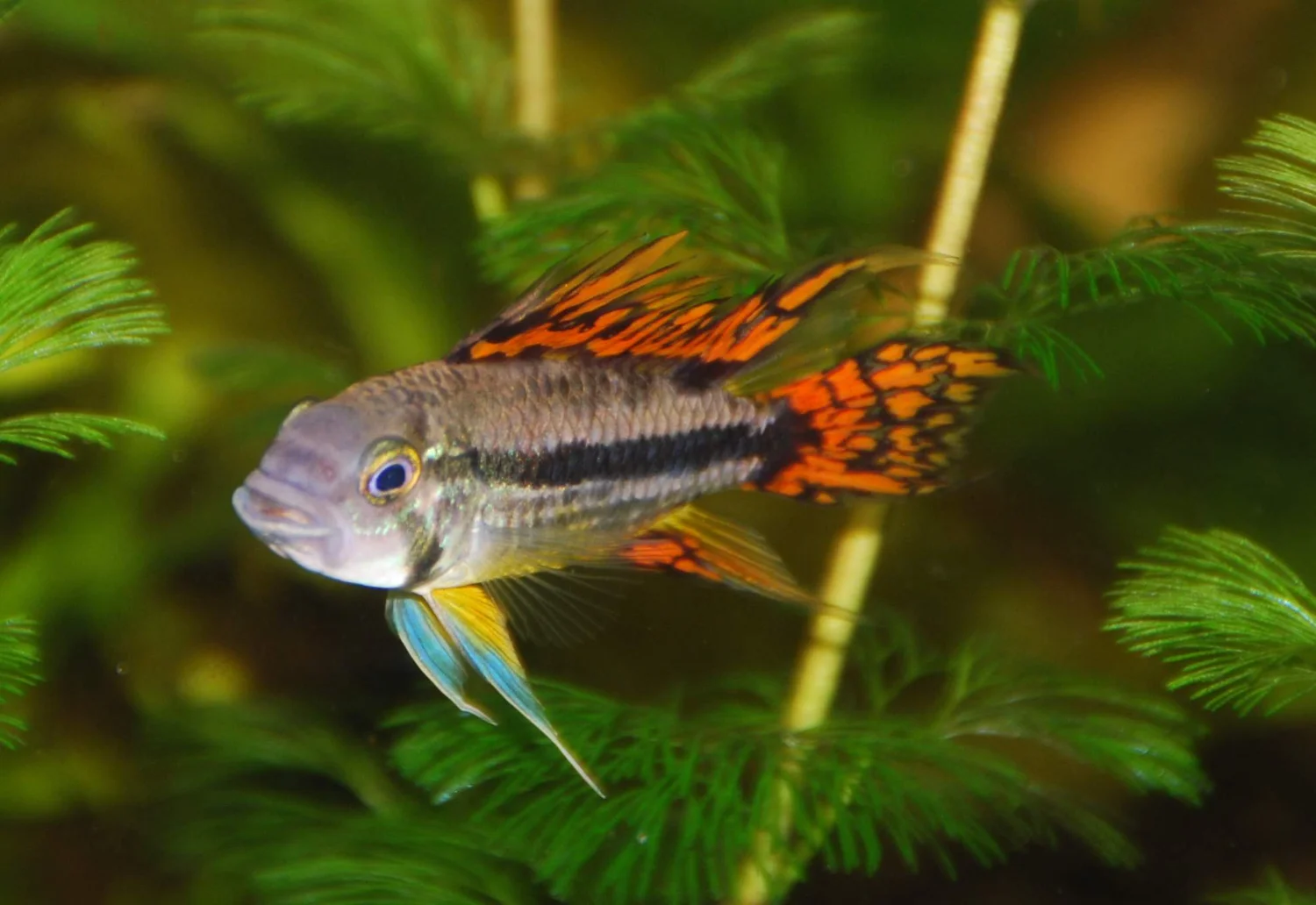
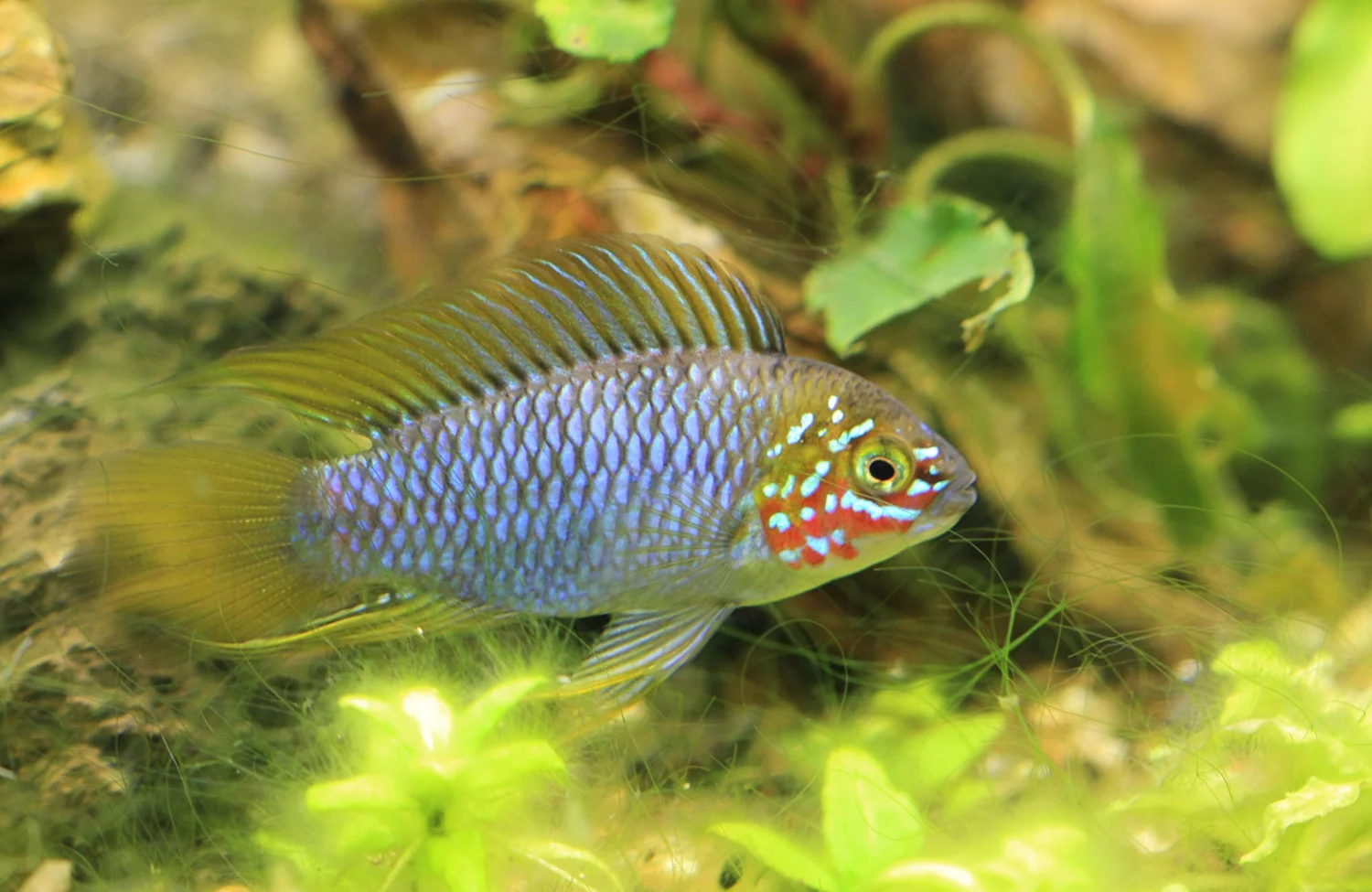
Mature males develop broad, rounded-looking fin displays; Opal is a familiar trade label. Color intensity changes with lighting and mood. Photograph both sides with fins visible and retain the seller’s information instead of deciding identity from a single saturated shop image.
From river to aquarium
Borellii comes from southern South America, including Paraguay, northern Argentina and southern Brazil. This range is a reminder that Apistogramma does not mean uniformly hot blackwater. When planning a community, compare temperature requirements first rather than placing every small South American fish together.
A practical aquarium plan
Plan at least 60 litres and a 60 × 30 cm base, with cover distributed across the bottom. Our 21–25 °C target favors moderate temperatures. Check the room’s summer conditions as well as the heater setting; a cool-water choice is less useful if the aquarium regularly overheats.
Feeding with observation
Supply small, varied foods and watch how quickly the fish approaches them. In a bustling community, targeted feeding may be more useful than increasing the total amount offered. Remove uneaten food and investigate persistent hiding rather than adding more food to compensate.
When breeding changes the balance
A sheltered spawning site and space away from the brood are essential. Even a comparatively mild species becomes territorial during reproduction. If breeding is the goal, organize live fry food and a safe maintenance routine before eggs appear; a community display and a productive nursery have different priorities.
Choose the company carefully
A quieter community with compatible temperature needs is the sensible starting point. Avoid fast feeders that repeatedly intercept food, and do not promise shrimp safety. Assess the individual fish over time: a label such as beginner-friendly describes relative demands, not an absence of social conflict.
Keep the story with the fish
Ask whether stock is an ornamental line or a locality strain, and keep that distinction in your notes. Buy fish that are feeding well and have a known recent history. Use the broad species profile to shortlist, then confirm the breeder’s actual maintenance conditions before transport.
Sources & editorial notes
Source-checked 2026-09-24. Species facts draw on the references below; aquarium targets, difficulty ratings and planning advice are our editorial synthesis. Targets are deliberately narrower than some reported field ranges and are not a guarantee for every locality or strain.
Informal groups and complexes are navigation aids, not fixed taxonomic ranks. Read the editorial approach.