Know what you’re looking at
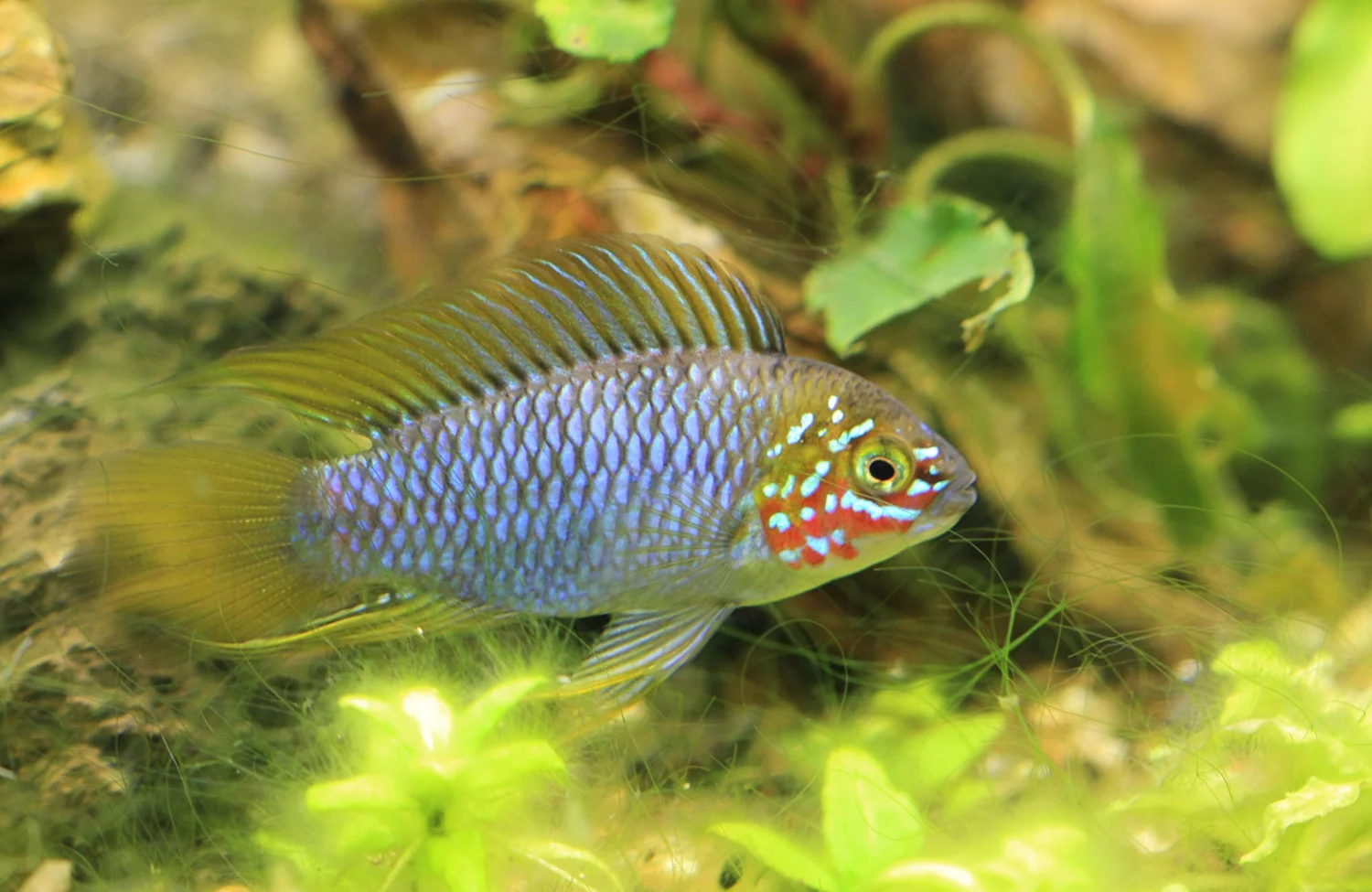
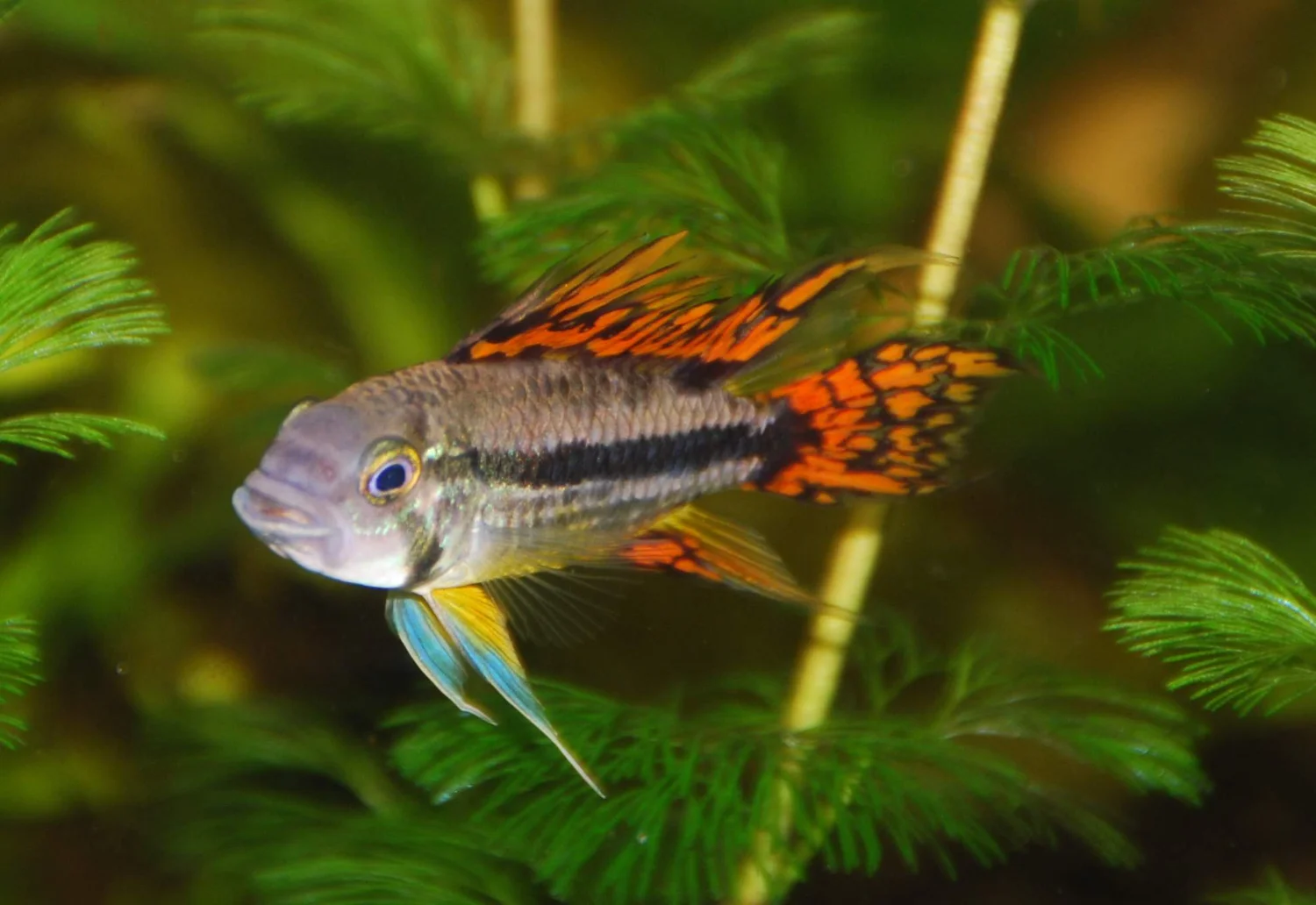
The three-stripe pattern gives the species its name, including an oblique lower marking. Read markings together with fin and body shape rather than counting any dark lines visible in one photograph. Mood, angle and lighting can hide details that appear clearly in a second view.
From river to aquarium
The documented range spans the Guaporé and Paraguay systems toward the middle Paraná. Quiet creeks and leaf-rich margins are useful habitat context. This southern distribution also argues against assuming that every Apistogramma belongs in a permanently hot aquarium.
A practical aquarium plan
Our planning target is 75 litres with a 60 × 30 cm base and moderate temperatures. Divide the bottom visually with wood and sheltered pockets. Watch for repeated pursuit at feeding time and do not wait for torn fins before deciding that the social arrangement needs to change.
Feeding with observation
Use appropriately small foods and distribute them where subordinate fish can feed. In a densely arranged tank, take time to locate each fish rather than interpreting an empty feeding area as a lack of appetite. Keep the maintenance routine predictable while new fish settle.
When breeding changes the balance
Provide separate retreats around sheltered spawning sites. A spawning female may defend a zone that changes how every other fish uses the aquarium. Plan a separation option in advance, and keep fry-food cultures ready if raising offspring is the intended outcome.
Choose the company carefully
The Finder treats trifasciata as a species-focused choice because managing bottom territory is a central part of its care. Companions add variables and may eat fry. A dedicated setup makes it easier to observe courtship, feeding and any escalation in pursuit.
Keep the story with the fish
Keep collecting-locality information distinct from general trade names. Different geographic forms should not be combined casually in a breeding project. If a seller lacks origin records, describe the stock as aquarium-source fish and avoid adding a precise location later.
Sources & editorial notes
Source-checked 2026-09-24. Species facts draw on the references below; aquarium targets, difficulty ratings and planning advice are our editorial synthesis. Targets are deliberately narrower than some reported field ranges and are not a guarantee for every locality or strain.
Informal groups and complexes are navigation aids, not fixed taxonomic ranks. Read the editorial approach.