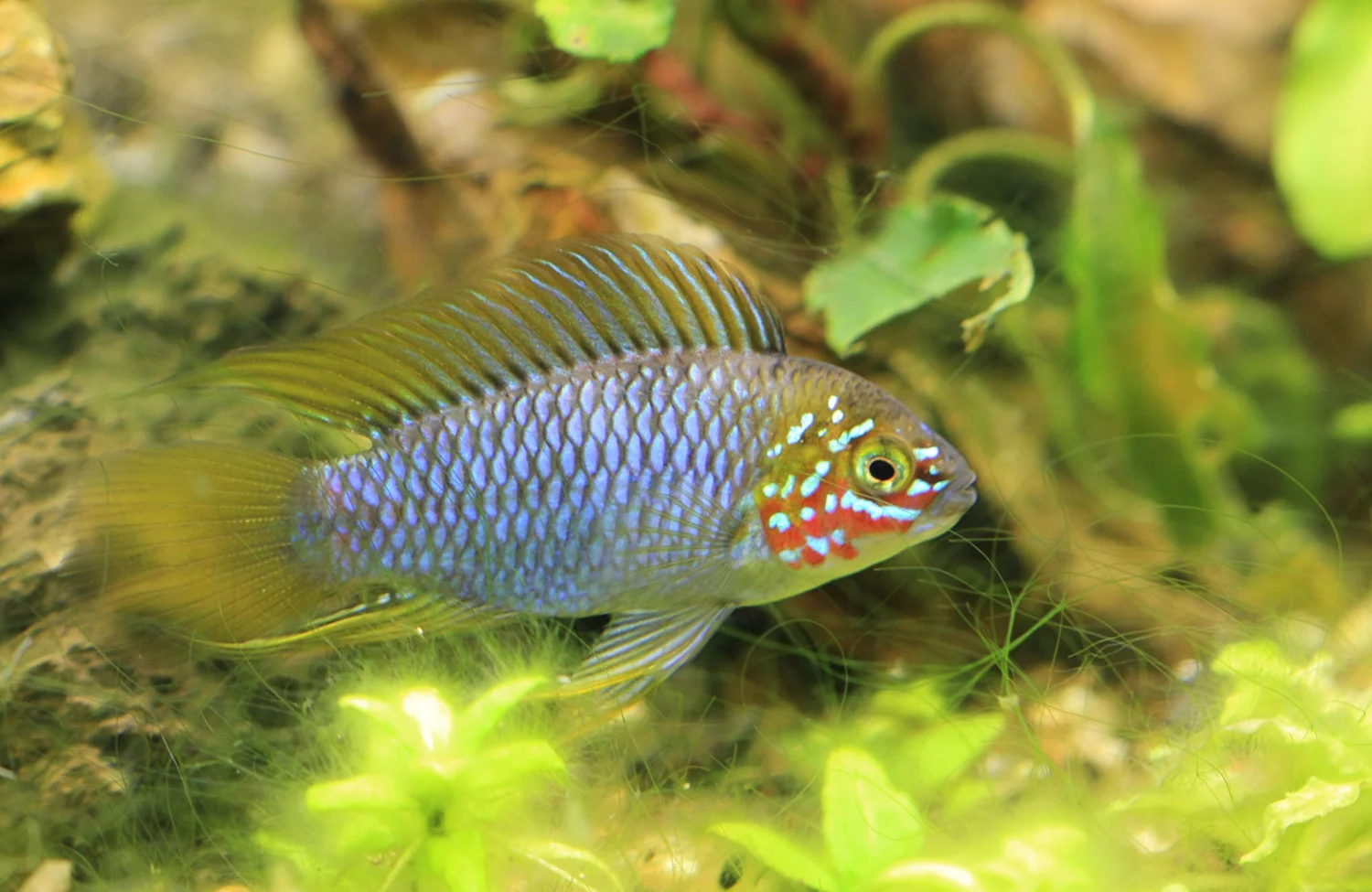
Know what you’re looking at
Aquarium males can show strong red coloration along the lower body, with less ornamented females. Selective breeding makes color a poor substitute for identification. Compare overall body shape and dark markings, and keep commercial form names attached to the actual line they describe.
From river to aquarium
The species is reported from the Vichada and middle Meta drainages and the middle Orinoco system. Small tributaries and quiet waters are part of its habitat context. Translate that into sheltered aquarium space rather than treating a country name as a complete biotope specification.
A practical aquarium plan
Our planning range aims at a stable, moderately warm aquarium with soft to moderately mineralized water. Prepare the layout before adding fish: multiple retreats should be visually separated, not simply clustered around one ornament. Inspect the quieter fish during feeding and maintenance, when displacement is easiest to notice.
Feeding with observation
Offer varied small foods and confirm that each individual consumes them. If a new fish only accepts one food, establish reliable feeding before changing several aspects of its environment. Keep portion sizes modest and use observation, not an automatic extra feeding, when food remains uneaten.
When breeding changes the balance
Provide sheltered cavities and a plan for separating fish if courtship turns into pursuit. A female defending eggs or fry may claim a larger zone than expected. Keep records of the pair, strain and water conditions so a successful brood can be repeated without guessing which change mattered.
Choose the company carefully
A carefully stocked community is possible with appropriate captive-bred individuals. Keep active or aggressive bottom competitors out of the initial plan. Breeding interest changes the decision: adult compatibility alone does not make a mixed aquarium a good place to raise a brood.
Keep the story with the fish
Ask the supplier how the line is named and whether it is captive-bred. Avoid converting a color description into an implied locality. If breeding, maintain distinct records for different strains and disclose uncertain ancestry rather than assigning a more desirable name to the offspring.
Sources & editorial notes
Source-checked 2026-09-24. Species facts draw on the references below; aquarium targets, difficulty ratings and planning advice are our editorial synthesis. Targets are deliberately narrower than some reported field ranges and are not a guarantee for every locality or strain.
Informal groups and complexes are navigation aids, not fixed taxonomic ranks. Read the editorial approach.