Know what you’re looking at
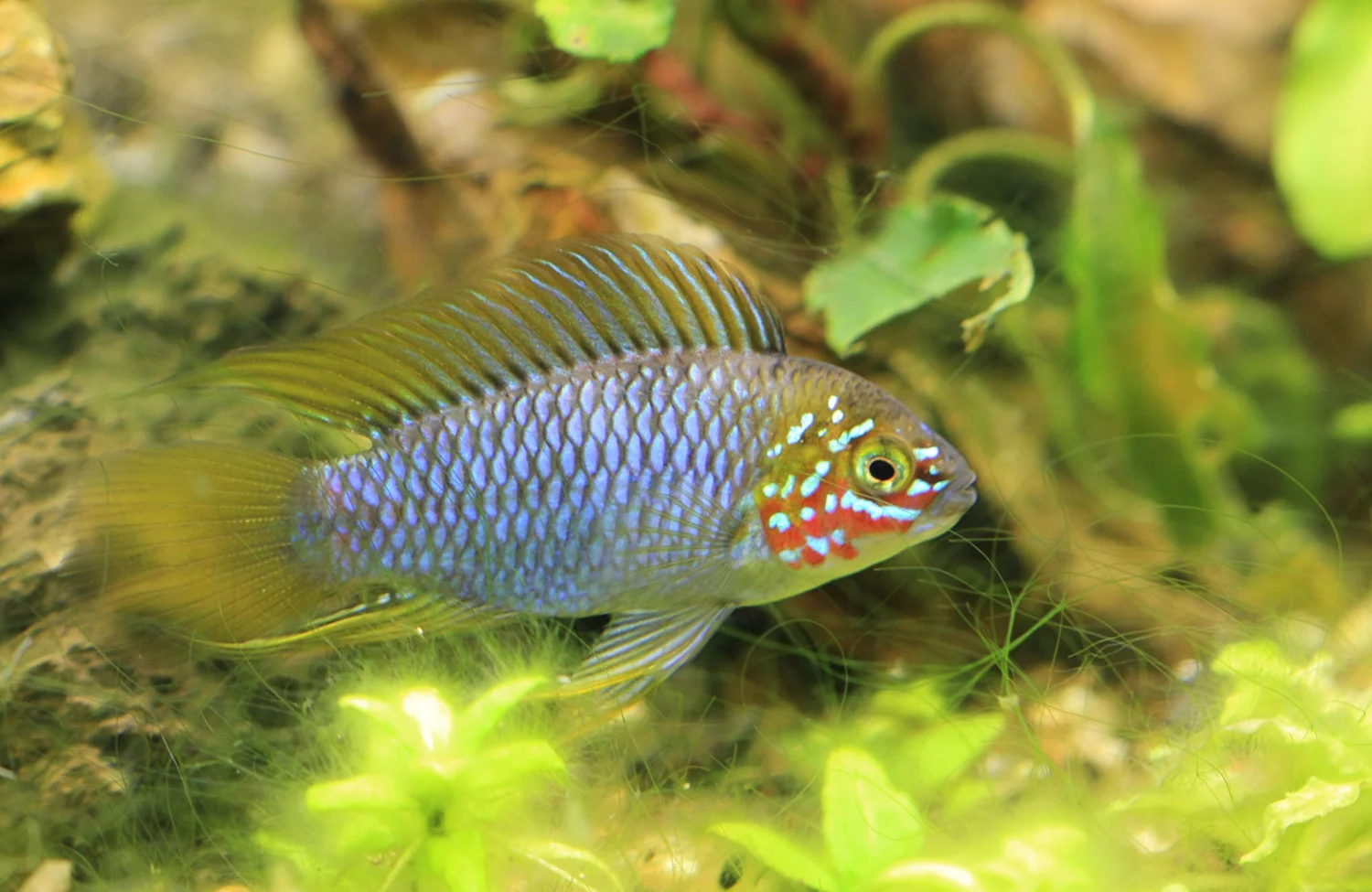
Mature males develop more extended fins than females and can look imposing for an Apistogramma. A138 is a useful trade reference. Verify identity using body and fin shape together with provenance; do not assume a similar fish from a different drainage has the same identity.
From river to aquarium
Published records include river systems in Guyana and Suriname. These Atlantic drainages broaden the field guide beyond the Amazon alone. Use a locality-specific source when pursuing a strict habitat aquarium rather than assigning generic blackwater conditions to every Guianan fish.
A practical aquarium plan
We use a 110-litre planning volume and a 90 × 30 cm base. Long sightlines still need interruption even in a longer tank. Place retreats so an excluded fish can reach food and shelter without repeatedly crossing the dominant individual’s preferred patrol route.
Feeding with observation
Offer varied small invertebrate foods and verify that subordinate fish receive enough. A larger adult can make the aquarium look well-fed while a smaller partner loses condition. Use a regular observation routine, especially after introduction or a change in the social arrangement.
When breeding changes the balance
Provide sheltered spawning options and space between territories. Prepare a divider or separate tank before attempting reproduction. Record behavior alongside water readings: the social response of the adults can explain a failed attempt more clearly than a single chemistry measurement.
Choose the company carefully
The Finder recommends a species-focused setup. Extra volume should first improve usable territory rather than immediately justify more bottom-dwelling fish. Any community plan needs compatible temperature requirements and a way to remove a fish without dismantling the entire aquarium.
Keep the story with the fish
Retain locality information and historic names exactly as supplied, with notes on confidence. Similar forms from adjacent drainages should not automatically be merged into one breeding line. If origin is unknown, make that clear to future keepers instead of supplying a guessed river name.
Sources & editorial notes
Source-checked 2026-09-24. Species facts draw on the references below; aquarium targets, difficulty ratings and planning advice are our editorial synthesis. Targets are deliberately narrower than some reported field ranges and are not a guarantee for every locality or strain.
Informal groups and complexes are navigation aids, not fixed taxonomic ranks. Read the editorial approach.